

By Kirk at Brushtek · September 8, 2026 · Exterior painting
When Is the Best Time to Paint a House Exterior in Minnesota?
The short answer: In the west metro, exterior paint wants surface and air temperatures above about 50°F for a couple of days, and nights that stay above the dew point, which puts the honest window from roughly May through mid-October. Low-temperature products stretch it to about 35°F. June through September is the core, and the calendar for those months fills in spring.
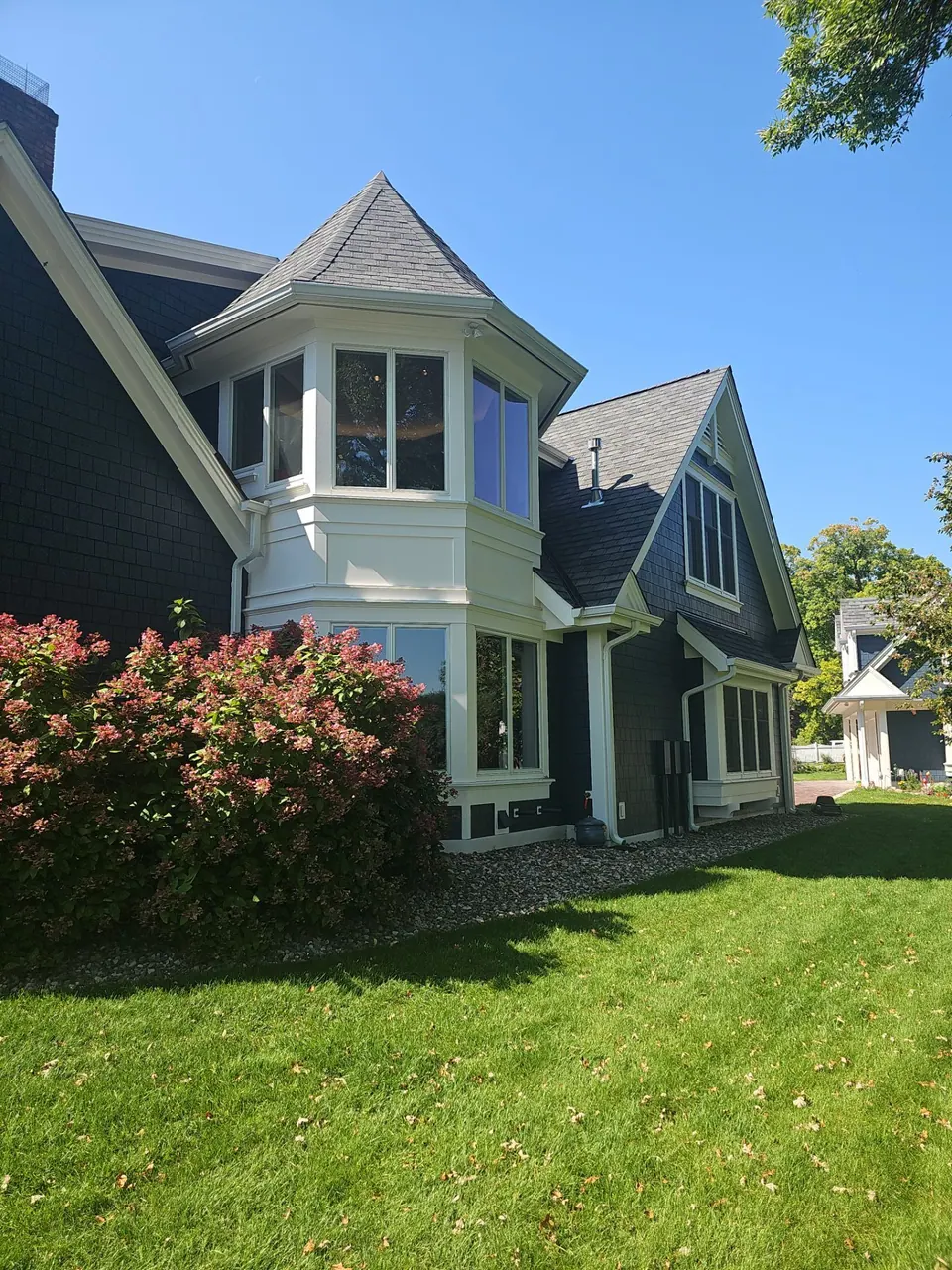
Every spring the phone starts ringing in March with people who want their house painted as soon as it warms up. We understand the itch. But paint does not care about the calendar. It cares about the temperature of the siding, the temperature of the air, and how much moisture is in that air overnight. Here is how we read a Minnesota season, and how we decide which houses get painted when.
So when should you paint the outside of your house in Minnesota?
Late May through September is the reliable window in the west metro, with mid-October as the practical end for standard paints. Inside that window, the good days are dry, between about 50°F and 85°F, with overnight lows that stay well above the dew point so the fresh coat does not get wet before it has set up.
Where you live shifts that a little. A house on the north shore of Lake Minnetonka in Orono sees more morning fog and slower drying in the shoulder months than a house on an open lot outside Buffalo, where the air is drier but the first frost tends to arrive sooner. We plan around both.
The 50 degree rule
Most exterior latex paints are labeled for application above 50°F, air and surface, and they want to stay above that for a day or two afterward while the film forms. Below that, the paint does not coalesce properly. It can look fine the day it goes on and then fail early: poor adhesion, a chalky surface, or a film that never reaches its full hardness.
Surface temperature is the number people miss. Siding holds cold. On a 55°F morning in early May, a shaded north wall can still be in the 40s at ten o’clock, and it may not reach 50°F until afternoon. The reverse is also true. A west wall in July sun can run 20 or 30 degrees hotter than the air, hot enough that paint flashes off before it levels, which leaves lap marks and a weak film. The wall matters more than the weather app, so we plan the day around which side of the house is warm enough to paint.
Dew point and overnight lows
The second number we watch is the dew point, especially in late summer and fall. When the siding temperature drops to the dew point overnight, moisture condenses on it. If the paint has not fully set, that dew gets into the film. The result is surfactant leaching: shiny or sticky streaks, sometimes brownish, running down the siding the next morning. It usually washes off eventually, but it is ugly, and on a bad night it can cause blistering.
This is why an afternoon coat in late September is a judgment call. The paint might have four hours of good drying before the sun drops and the temperature slides. If the overnight low is forecast within a few degrees of the dew point, we stop early or hold that wall for the next morning. On the lake, where humidity hangs and fog rolls in, we stop earlier still.
Month by month in the west metro
- April. Too early for standard paint most years. Nights freeze, and the ground is still throwing moisture. We use April for prep on dry days: scraping, sanding, caulk, and priming bare wood with a product rated for the temperature.
- May. The season opens, usually in the second half. Surfaces are still cool in the morning, so we start on sunny walls and move to shade as the day warms.
- June through August. The core season. Long days, warm siding. The limiting factors become heat and thunderstorms. We chase the shade around the house on hot days and watch the radar.
- September. Often ideal: warm days, cooler nights, low humidity. The dew point starts to matter again by the second half of the month.
- Early October. Still workable with attention. We front-load north and shaded walls into the warm afternoons and keep an eye on overnight lows.
- Mid-October onward. Standard paint is done for the year. Low-temperature products can push it later on a good week, but the days are short and the margin is thin.
North walls dry slowest
Every Minnesota house has a wall that sets the schedule, and it is almost always the north side. It gets little or no direct sun, it stays cooler all day, and it holds dew longer in the morning. On a wooded lot along the Lake Minnetonka shore, a north wall under mature trees may not fully dry until noon even in July.
We sequence a house around that wall. On a spring or fall job, the north side gets painted in the warm part of the afternoon, when the surface finally reaches temperature, and never late in the day. In peak summer, the north wall is the one we save for the hottest afternoons, because it is the only wall that is comfortable to paint at three o’clock.
The same slow-drying shade is a big part of why paint fails on north walls first, which we cover in a separate post on why exterior paint peels on the north side.
Low-temperature paints
Several manufacturers make exterior paints rated down to about 35°F. They use a different resin package that can form a film in cool air, and they are real products that we use when a job runs into October.
What they do not fix is moisture. A 35°F paint still cannot go on a damp wall, still cannot be rained on for a day, and still needs the surface to stay above its rated minimum until it sets. In practice, a 35°F rating means a good October day is usable. It does not mean November is painting season. Frost on the siding in the morning is the end of the line no matter what the can says.
October: watch the forecast, not the calendar
People ask us if October is too late. The honest answer is that it depends on the week. A sunny stretch of 60-degree days with nights in the 40s is fine painting weather for a standard product, and we finish plenty of jobs in early October in exactly that kind of week. A week of 48-degree highs and cold rain is not painting weather, even on October 2nd.
What changes in October is the margin. The days are shorter, so the paintable hours shrink to late morning through mid-afternoon. Overnight lows get close to the dew point more often. The consequences of a bad guess are bigger, because there is no warm week coming to bake out a marginal coat. So in October we check the ten-day forecast before we commit, we do not start a wall we cannot finish and let set that day, and we are willing to push a job to spring rather than force it.
Book exterior work in spring
Because the season is short, the calendar fills up. Most of our June through September exterior work is booked by late spring. If you want your house painted in a specific month, the time to get on the schedule is March or April, when we can still walk the house, write the estimate, and put you on the calendar in the order requests came in.
Booking early also gives us time to do it right. We can prep in April on a dry day, let repaired wood and new caulk cure, and paint in May or June instead of rushing prep and paint into the same week.
If you are thinking about the outside of your house this year, the exterior house painting page covers what a full job includes, and our contact page is the place to send a few photos and get on the spring list.
Want us to look at your project?
Text a few photos and tell us what you are after. Written estimate, usually within one business day.
Related questionsStraight answers.
At what temperature should you not paint outside?
Below 50°F for standard exterior latex, measured on the siding as well as in the air, and below about 35°F even for low-temperature products. Also skip any day when the overnight low will drop near the dew point before the paint sets, and any wall that is too hot to hold your hand on in direct sun.
Is October too late to paint outside?
Not automatically. Early October in the west metro often has usable weeks: highs in the 50s or 60s, dry days, nights well above the dew point. We paint into October in those conditions and stop when the ten-day forecast turns. After mid-October the paintable hours shrink and the margin for a bad guess is gone, so we push to spring.
What time of year should you paint the exterior of your house?
Late May through September in Minnesota, with June to early September as the core. Spring paint goes on cold siding, fall paint fights dew and short days, and summer has the longest stretch of warm, dry siding. Book in March or April, because the summer calendar fills before the season opens.
How long should siding dry after rain before painting?
At least a full sunny day for wood siding, longer for a shaded north wall, and bare wood needs to be dry to the touch and dry underneath before primer goes on. Fiber cement and previously painted siding shed water faster, but the joints, end grain and the underside of laps still hold moisture.