

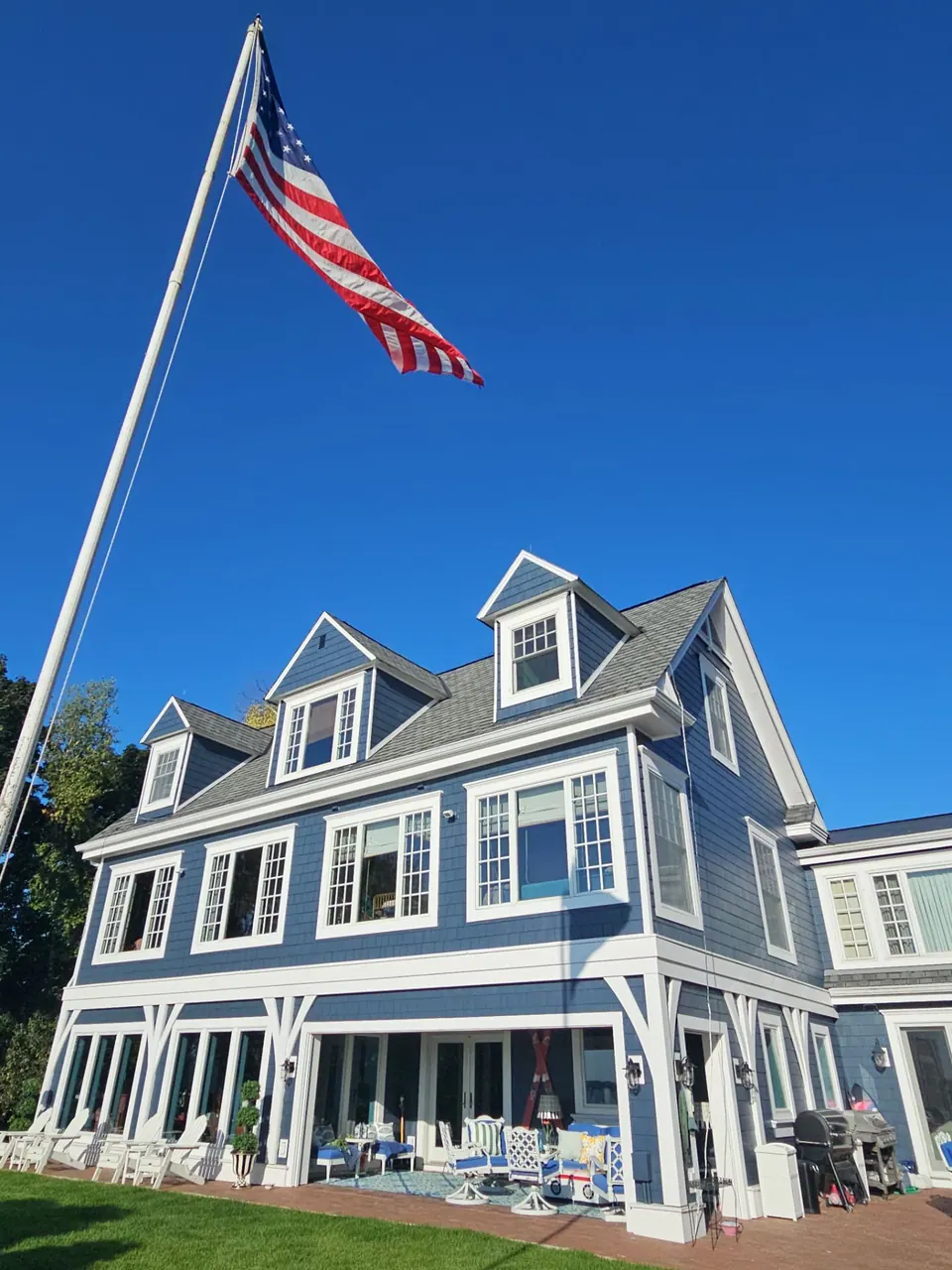
The Minnesota exterior window and how we schedule around it
The rule of thumb is 50 degrees, but the number that matters is the overnight low. Paint applied on a 60-degree afternoon that drops to 38 that night does not cure right, and the film can lose adhesion before it ever gets hard. So May is a starting gate rather than a guarantee, and the same is true of October at the other end. Between them, July and August bring the opposite problem: high dew points that slow drying and afternoons too hot to paint a south wall in direct sun. We book exterior work from late spring, run the sunny sides early and late in the day in midsummer, and hold the last weeks of the season for houses that can be finished before the first hard frost.
- Surface and air above 50 degrees, day and overnight, for a couple of days
- Low-temperature products extend the edges to about 35 degrees
- July and August: dew point and direct sun set the daily plan
Why exterior paint peels here: freeze-thaw, moisture drive and the north wall
Paint in Minnesota fails from the back, not the front. Moisture gets into siding from rain, snow piled against the bottom courses, ice dams over the soffit, and warm indoor air pushing out through the wall in winter. When it freezes it expands, and the paint film lifts. The north side of a house is the worst because it never gets the sun that would dry it, so it stays damp, grows mildew, and peels first. Lake homes get it from two directions: weather off the water and reflected sun. The fix is in the prep. We wash, scrape to a sound edge, check wood with a moisture meter, prime bare wood the same day, and caulk after primer so water has fewer ways in. Our post on why paint peels on the north side goes into the mechanics.
Prep is most of the job: wash, scrape, sand, meter, prime, caulk
On a repaint, the topcoats are the fast part. Prep is where the days go. We start by washing the house to strip chalk, mildew and dirt, then wait for it to dry, which on a shaded wall can take a full day. Loose and peeling paint gets scraped to a sound edge and feathered with a sander so the old edge does not show through the new coat. Bare wood gets primed the same day it is exposed because weathered wood loses its grip on paint quickly in the sun. We pin the wood with a moisture meter before primer and again before topcoats, and we move to a drier side of the house rather than paint a wet wall. Caulk goes on after primer at joints, corners and window trim. Then two coats of a 100 percent acrylic exterior paint, brushed and rolled or sprayed and back-rolled depending on the siding.
What a full exterior covers: siding, trim, soffit, fascia, doors and garage
A full exterior repaint means every painted surface on the outside of the house, and the estimate lists them so nothing is assumed. Siding is the big one, whether it is lap siding, engineered wood, fiber cement, stucco or cedar, and each has its own prep. Trim, window casings and corner boards are usually a second color and get brushed. Soffit and fascia are the most neglected surfaces on a house because nobody looks up, and they are also where ice dams do their damage. Front doors and garage doors are their own line, since they need an enamel that holds up to being touched and to full sun. Shutters, railings and porch ceilings round it out. We paint gutters and downspouts when they are paintable and say so when they are not.
- Siding in all common materials, each with its own prep
- Trim, casings and corner boards, usually brushed in a second color
- Soffit and fascia, where ice dam damage shows first
- Entry and garage doors in a hard enamel
- Shutters, railings, porch ceilings, paintable gutters
Minnesota has two painting seasons
Exterior season runs roughly May to mid-October. Interior work runs all year.
Exterior paint wants the wall and the air above 50°F for a couple of days. Around here that is roughly May through mid-October, and low-temperature products stretch the shoulders. The other months are interior season: walls, trim, cabinets and built-ins.
Navy = exterior window · paper = interior season
When we would talk you out of it
- Siding that is rotten, delaminated or swollen. Paint will not hold on failed hardboard or punky wood. Replace the bad boards first, then we prime and paint the whole side so it matches.
- Vinyl siding you want painted a darker color. Dark paint makes vinyl absorb heat and warp. It can be painted in a color as light or lighter than the original, but a dark repaint is a bad idea and we will say so.
- A house that needs painting in November. The overnight lows are below what any paint can cure in. We will put you at the front of the spring list rather than risk a finish that peels by March.
What you get
- Washed and fully dry before any scraping or priming
- Moisture meter readings on wood before primer and before topcoat
- Bare wood primed the same day it is exposed
- Caulk applied after primer at every joint and window
- Two coats of 100 percent acrylic exterior paint
- Written estimate that names every surface, from siding to soffit
How it goes
- 1
Photos of each side, then a walkthrough
Text us a photo of each elevation and a close-up of the worst peeling. We come out, check the wood, and leave a written estimate that lists every painted surface.
- 2
Wash, dry, scrape and sand
The house is washed to remove chalk and mildew and left to dry. Loose paint is scraped to a sound edge and the edges are feathered so they do not show through.
- 3
Meter, prime, caulk
Wood is checked with a moisture meter. Bare spots are primed the same day. Caulk goes on over primer at joints, corners and window trim so water has fewer ways in.
- 4
Two topcoats, then a walk around
Two coats of acrylic exterior paint, sprayed and back-rolled or brushed depending on the surface. We walk the house with you at the end and touch up what you point at.
What does exterior house painting cost in Minnesota?
Exterior work is quoted from photos of each side of the house for a range, then from a walkthrough for a firm number, and prep drives the number more than anything else. A house with sound paint that has faded needs a wash and two coats. A house with peeling on the north side and bare wood on the fascia needs days of scraping, sanding and priming before any color goes on. Two-story and walkout homes need more ladder and staging time than ramblers. Siding material matters, since cedar and stucco each add steps, and so does the number of colors and the amount of trim. Doors, shutters and garage doors are separate lines. The estimate is free, written and itemized by surface.
- Condition of the existing paint: fading versus peeling
- Stories, walkouts and roof lines that need staging
- Siding material: lap, engineered wood, fiber cement, stucco, cedar
- Amount of trim and number of colors
- Bare wood to prime and boards to caulk
- Doors, shutters, garage doors and railings included
- Season and weather windows available
Questions we get on the phoneStraight answers.
Is October too late to paint outside?
Early October is usually fine in the west metro. Late October is a gamble. What matters is the overnight low staying above 50 degrees, or above about 35 with a low-temperature product, for a couple of nights after each coat. Once frost is in the forecast, we stop and put the house at the front of the spring list.
At what temperature should you not paint outside?
Below 50 degrees for standard exterior paint, and below about 35 for low-temperature formulas, measured at the surface and including the overnight low, not only the afternoon high. Paint that goes on warm and gets cold before it cures loses adhesion and can peel within a season. Humidity and direct sun on a hot wall matter too.
What time of year should you paint the exterior of your house?
In the west metro, late May through September is the reliable stretch, with early October workable in a dry year. June and September are the easiest months: warm days, cool nights above the cure threshold, and lower dew points than July and August. Book in spring, since the good weeks fill up.
How long does exterior paint last in Minnesota?
Roughly seven to ten years on well-prepped siding with two coats of good acrylic, less on south walls that bake and north walls that stay damp. Trim, doors and anything horizontal go sooner. Prep quality matters more than paint brand. A house painted over chalk or wet wood can fail in two years no matter what was in the can.
Do you pressure wash before painting?
We wash every house before painting, with pressure kept low enough not to drive water into the siding or gouge cedar. The goal is to remove chalk, mildew and dirt that paint cannot bond to. Then the house dries, which can take a day on shaded walls, before any scraping or priming starts.
Related
Where we do this work
Exterior painting across Independence, Medina, Corcoran, Orono, Wayzata, Plymouth, Maple Grove and Minnetonka, and the rest of the west metro and Central Minnesota. See the full service area.