

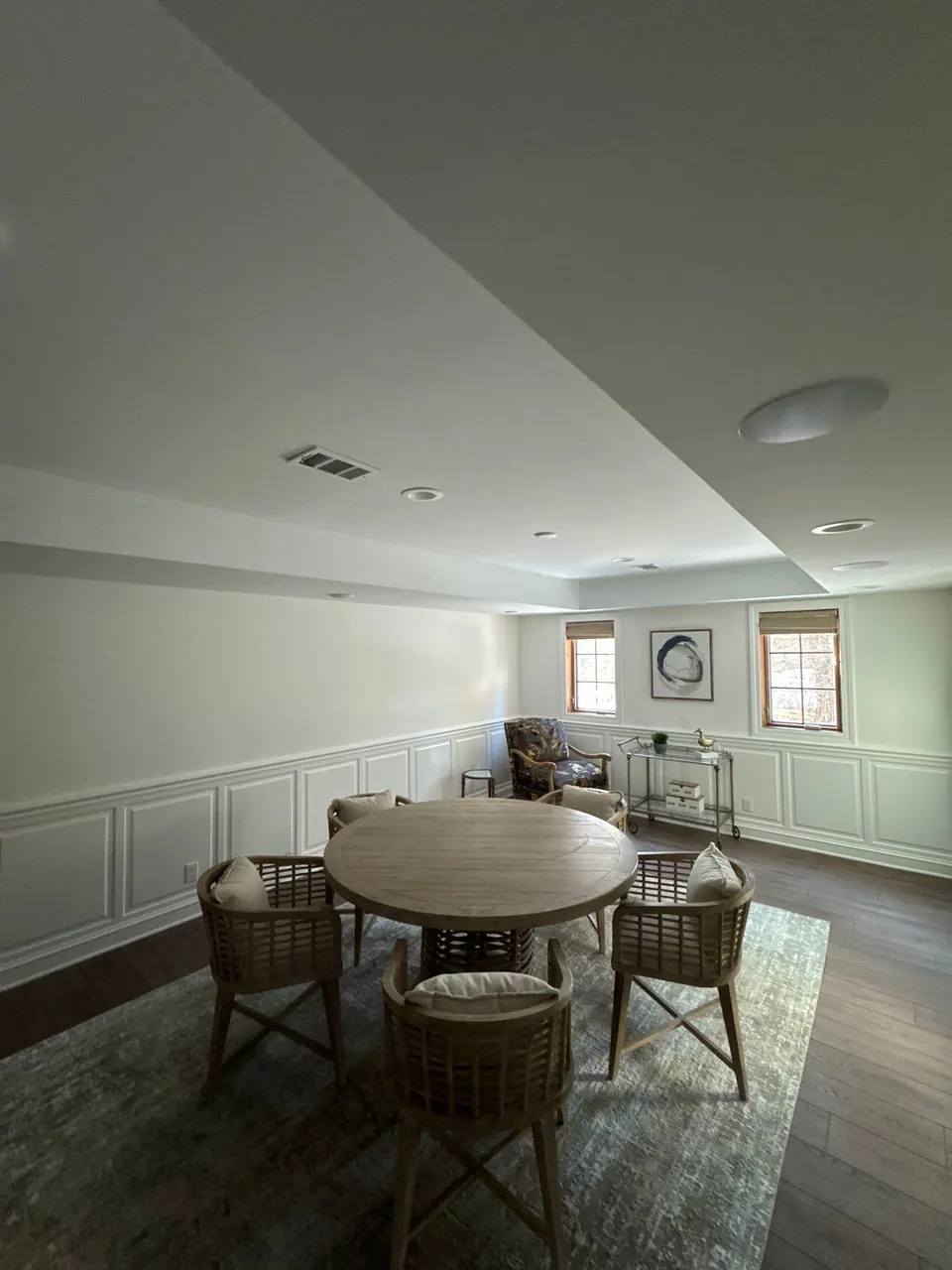
Painting 1990s oak trim white without it peeling
Most of the houses in Plymouth, Maple Grove, Medina and the surrounding towns from that era came with stained and varnished oak trim, and painting it is the single most requested trim job we get. The varnish is the problem. Paint will not bond to it without help, and a quick coat of wall paint over oak peels at the edges within months. Our process is the one that holds: clean with a degreaser, scuff sand every face, wipe the dust, fill the grain if you want a smooth look, then a bonding primer built for slick surfaces and two coats of trim enamel. The open grain of oak will still show a little texture under paint unless it is filled, and we are honest about that before you decide.
- Degrease and scuff sand every face of the trim
- Optional grain fill for a smoother look on oak
- Bonding primer, then two coats of hard trim enamel
Built-ins, wainscoting and the millwork in new custom builds
The builders we finish for in the west metro put a lot of millwork in a house: fireplace built-ins, mudroom lockers, dining room wainscot, arched nooks, floating shelves. That work arrives primed but rough, with nail holes, seams and sanding scratches that all telegraph through gloss paint. We fill and sand every hole and joint, caulk where trim meets drywall so the line is one clean edge, and spray or brush a trim enamel that levels out flat. On a built-in with many faces, a sprayed finish avoids brush marks in the corners. On a run of baseboard in an occupied house, a brushed enamel that self-levels is the practical choice. We pick per job and tell you which you are getting.
Doors, casings and the sheen question
Trim takes more abuse than walls. Baseboards get vacuumed, casings get bumped, and doors get grabbed with wet hands. So trim wants a harder, glossier finish than the walls around it, and that finish needs to level rather than hold brush marks. We use a satin or semi-gloss trim enamel for most homes, with semi-gloss on doors and anywhere that gets wiped daily. Interior doors come off their hinges when we can, get laid flat, and are painted both sides with the hardware removed so there is no cut line around a hinge. In winter, dry furnace air makes enamel set fast, so we work in shorter runs. In a humid July it stays open longer and we give it a full day between coats.
When we would talk you out of it
- Trim you want to keep stained. We can refresh a clear coat, but color-matching a new stain to thirty-year-old oak across a whole house is a refinisher's job, and we will tell you so.
- MDF trim that has swelled from water at the bottom of a bath or mudroom. Paint will not hide the bulge. Replace the damaged run first; we can paint the new piece.
- A single door or one short run of baseboard as a standalone visit. It is not good value for you. We will fold it into a larger job or suggest doing it yourself.
What you get
- Bonding primer on varnished oak so the enamel stays put
- Nail holes, seams and caulk lines filled before any finish coat
- Doors off the hinges and painted flat, hardware removed
- Sprayed finish on built-ins where a brush would leave marks
- Hard enamel in satin or semi-gloss that wipes clean
- Crisp line where trim meets wall, brushed not taped
How it goes
- 1
Photos of the trim and its finish
Send a close photo of a casing and a baseboard. We can tell varnished oak from primed MDF from paint-grade pine and quote the right prep before we visit.
- 2
Clean, sand, fill, caulk
Every face is degreased and scuffed. Nail holes and joints are filled and sanded flush. The seam between trim and wall is caulked so the paint line is one clean edge.
- 3
Bonding primer where it is needed
Varnished or glossy trim gets a bonding primer built for slick surfaces. New primed millwork gets spot priming on the fills so nothing flashes through the enamel.
- 4
Two coats of enamel, sprayed or brushed
Built-ins and doors are usually sprayed. Baseboard in an occupied home is usually brushed with a self-leveling enamel. Two coats either way, with a light sand between.
What does it cost to paint trim and molding?
Trim is priced by the running foot and by the piece, not by wall area, and we quote it from photos or a walkthrough. The biggest driver is what the trim is now. Painting primed new millwork is fast. Converting varnished oak to white takes cleaning, sanding, priming and two enamel coats, so it is a much larger job for the same footage. Doors count separately, and a house can have thirty of them. Built-ins and wainscot with many faces take longer than a straight baseboard run. Crown and stair parts take longer than casings. The estimate lists trim by type and room so you can start with the rooms that matter.
- Current finish: primed, painted, or varnished oak
- Running feet of base, casing and crown
- Number of doors, and whether they come off the hinges
- Built-ins, wainscot and stair parts with many faces
- Grain fill on oak for a smoother look
- Sprayed versus brushed application
Questions we get on the phoneStraight answers.
Can you paint oak trim without sanding it?
Not well. The varnish on oak trim is slick, and paint over it without a scuff sand and a bonding primer will chip at the edges within a year. A liquid deglosser helps, but sanding is still the step that makes the finish last. We sand, prime with a bonding primer, and then apply two coats of enamel.
Does painted oak trim look smooth?
Painted oak keeps a faint grain texture because the wood is open-pored. Most people like it, since it reads as real wood rather than plastic. If you want a glass-smooth look, we fill the grain before priming, which adds a step and cost. We show you a sample of each so you can decide.
Should trim be semi-gloss or satin?
Satin for most trim in a home, semi-gloss for doors and anything that gets wiped daily like a kitchen baseboard or a bathroom casing. Semi-gloss shows more flaws in the surface, so it wants the more thorough prep. Both are harder and more wipeable than wall paint. We match the sheen to how the room is used.
How long before I can close a freshly painted door?
Give it a day before closing it against the stop, and a couple of weeks before it is fully hard. Enamel dries to the touch in hours but keeps curing. Closing a door too soon leaves a print on the edge. Dry winter air speeds this up; a humid summer week slows it down.
Related
Where we do this work
Trim and molding across Independence, Medina, Corcoran, Orono, Wayzata, Plymouth, Maple Grove and Minnetonka, and the rest of the west metro and Central Minnesota. See the full service area.