

Popcorn, knockdown and smooth: what the west metro actually has overhead
Houses built here from the 1980s through the mid 2000s mostly have textured ceilings. Popcorn was common through the 1980s and into the 1990s; knockdown took over after that. Both drink paint. A popcorn ceiling that has never been painted can pull texture off on the first roller pass if the roller is too wet or the paint is too heavy, so we prime with a light first coat and let it lock the texture down before the finish coat. Knockdown needs a thick nap to reach into the low spots without leaving holidays on the high ones. Smooth ceilings in newer custom builds are the opposite problem: every lap mark and seam shows unless the paint goes on fast, wet and in one direction with the light source, in a true flat.
- Popcorn: light first coat to lock texture, then finish
- Knockdown: thick nap, more paint, watch for holidays in the low spots
- Smooth: wet edge, one direction toward the window, dead flat
Water stains, nicotine and the yellowed ceiling
A brown ring on the ceiling is usually an old ice dam leak or a bathroom above, and it will bleed straight through ordinary ceiling paint no matter how many coats you put on. The stain has to be sealed first with a stain-blocking primer, and we will ask whether the leak is fixed before we cover the evidence. Nicotine and cooking residue behave the same way and also need washing before primer. Plain yellowing from age is easier: a good flat ceiling white in two coats brings it back. If the stain is soft or the drywall is sagging, that is a repair and not a paint job, and we will say so rather than paint over a problem that comes back in the spring.
Vaulted ceilings, wood ceilings and the rooms that need staging
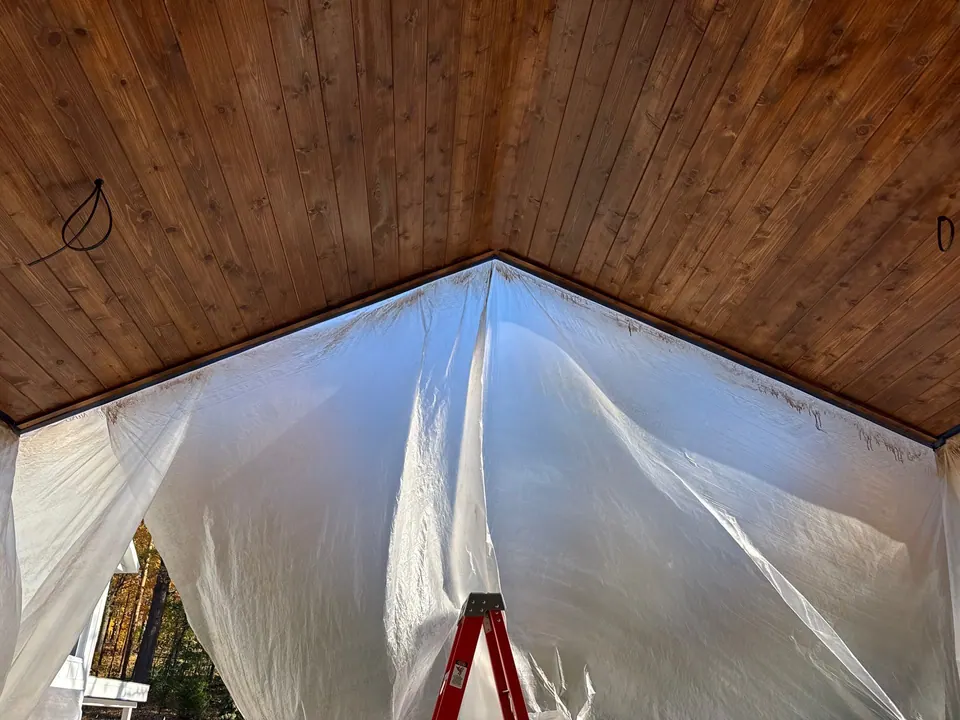
Great rooms with a vaulted ceiling are common in newer west-metro builds and in lake homes, and they change the job. We bring staging or an extension setup rather than balancing on a ladder over a stair, and we mask the room more thoroughly because paint mist travels farther from twelve feet up. Where a vaulted ceiling has a wood section, as in the photo on this page, that wood gets masked off completely so the painted drywall meets it at a clean line. Fans, can lights and beams all get pulled or wrapped. It takes more time than a flat eight-foot ceiling, which is why it is a separate line on the estimate, and it is also the job that makes the biggest difference when it is done.
When we would talk you out of it
- A ceiling that is sagging, cracked along the seams, or has soft spots. That is drywall repair or a truss issue first; paint will not hold it up.
- Popcorn you want removed rather than painted. Removal is a messy separate trade, and older popcorn should be tested before anyone scrapes it. We can paint it or recommend someone to remove it.
- An active leak. Seal the roof or the plumbing, let it dry, then we prime the stain and paint.
What you get
- Roller nap matched to the texture so coverage is even
- Stain-blocking primer on water rings and smoke before finish paint
- Dead-flat ceiling white that hides seams and lap marks
- Staging for vaulted rooms and stairwells, not a ladder on the stairs
- Fans and fixtures pulled or masked instead of painted around
- Walls and floors protected from mist and drips
How it goes
- 1
Photos and a look at the stains
Send a photo of the ceiling and any stains. We can tell popcorn from knockdown and a seal-and-paint job from a repair job before we come out.
- 2
Mask the room fully
Ceiling work throws mist. Walls, floors, fixtures and fans get covered, and furniture is moved or wrapped so nothing below gets speckled.
- 3
Prime stains, lock texture
Water rings and smoke get a stain-blocking primer. Unpainted popcorn gets a light first coat to hold the texture before the finish coat goes on.
- 4
Finish coat with the light
Finish coat rolled in one direction toward the main window, wet edge kept, so seams and laps do not show once the sun comes in sideways.
How much does it cost to paint a ceiling?
Ceilings are priced by area, height and texture, and we quote from photos or a walkthrough. A flat eight-foot ceiling in a bedroom is a quick job. The same area in knockdown takes more paint and more passes. A vaulted great room needs staging and more masking, so it costs more per square foot than a flat one. Stains add a primer step. Painting ceilings at the same time as walls is cheaper than a separate trip, because the room is already masked and we are already there. The estimate lists each ceiling separately so you can decide which ones matter.
- Ceiling area and height
- Texture: smooth, knockdown or popcorn
- Stains or smoke that need a sealing primer
- Vaulted rooms and stairwells that need staging
- Fixtures, fans and beams to remove or mask
- Done with the walls or as a separate visit
Questions we get on the phoneStraight answers.
Should I paint the ceiling the same color as the walls?
Usually a ceiling white in a flat finish is the safe answer, because it reads as clean and bounces light down. Painting the ceiling the wall color works in small rooms and bedrooms where you want a cozier box, and in rooms with a very light wall color. Dark ceilings in a low room make it feel lower. We can show you both on a sample.
Can you paint over a popcorn ceiling?
Yes, if it is sound and dry. The first coat has to go on light so the wet roller does not pull texture loose. Once that coat locks the popcorn down, the finish coat rolls normally. If the popcorn has never been painted and is very soft, we test a small area first. Removal is a different job.
Why does my ceiling show roller marks?
Almost always because the paint had sheen in it or it was rolled in several directions after it started to set. Ceiling paint should be a true flat, rolled in one direction toward the light with a wet edge kept the whole way across. That combination is how you get a ceiling that looks like one piece instead of a patchwork.
How do you stop a water stain from bleeding through?
With a stain-blocking primer over the dry stain, then the finish paint. Regular ceiling paint will let the stain migrate back through in weeks. We also ask what caused the stain. If it was an ice dam or a bathroom leak that is not fixed yet, painting is a waste of your money until the water is stopped.
Related
Where we do this work
Ceiling painting across Independence, Medina, Corcoran, Orono, Wayzata, Plymouth, Maple Grove and Minnetonka, and the rest of the west metro and Central Minnesota. See the full service area.